Your iPhone carries a lot of essential information that you probably don’t want to fall into the wrong hands. So, it’s needless to say that your device getting lost or stolen can be a huge problem. Although Apple already has multiple security features you can enjoy, another is now available for your device: Stolen Device Protection.
What exactly is Stolen Device Protection on your iPhone, though? How do you set the feature up, and what does it do? Keep reading, and we’ll answer all of these questions for you.
What Is Stolen Device Protection and What Does It Do?
Stolen Device Protection is a feature that adds an extra layer of protection to your iPhone if someone else manages to get a hold of it. The tool is especially useful when you’re away from work, home, and other locations that your iPhone recognizes.
After activating Stolen Device Protection, anyone using your phone will need Face ID to access various parts of your iPhone. On top of that, people won’t be allowed to change security settings – such as your password – without verifying biometric identity twice and waiting for an hour between both verification prompts.
In addition to devices that use Face ID, you can also get Stolen Device Protection on iPhones with Touch ID. The only requirement is that you download the necessary software update.
When you activate Stolen Device Protection, anyone with your device can ONLY use Face ID or Touch ID. This is different from opening your iPhone, for example, where users can enter your passcode if Face or Touch ID doesn’t work.
What Does Stolen Device Protection Help Limit?
Stolen Device Protection is a handy feature if someone has bad intentions. For example, the authentication requirements will apply to saved passwords and keys – along with any payment methods that you’ve used in Safari before.
Other things that Stolen Device Protection will require two verifications for include:
Erasing your content and settings.
Setting up a new iPhone via your current device.
Apple Card settings, namely being able to see your card number and applying for a new one.
How to Get Stolen Device Protection on Your iPhone
To get Stolen Device Protection on your iPhone, you’ll first need to download the required software and then set up the feature. Below, you’ll find out how to do both of these.
Download iOS 17.3
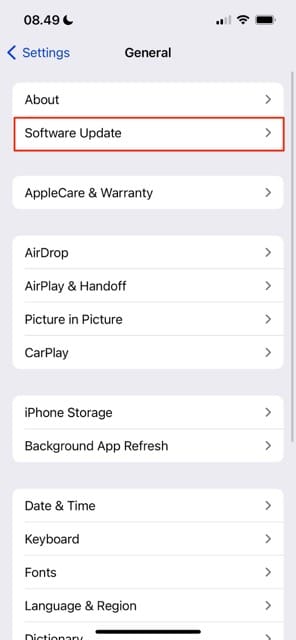
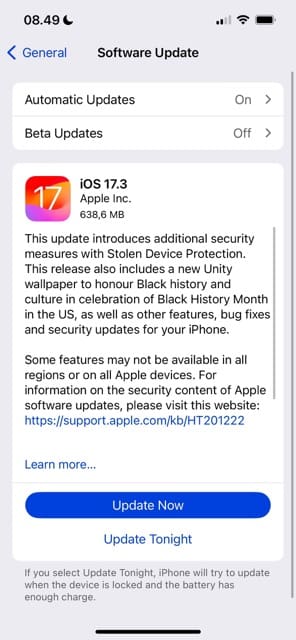
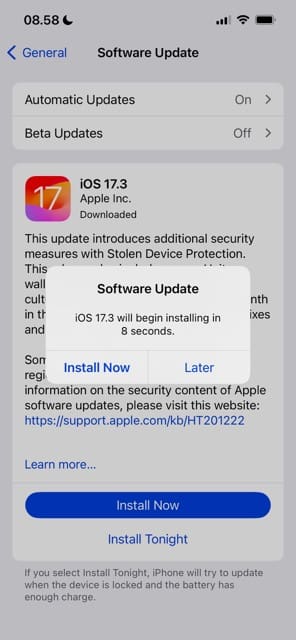
To download iOS 17.3, go to Settings > General > Software Update. Then, follow these steps.
Wait for your iPhone to search for a new update. If you haven’t downloaded iOS 17.3 yet, you should see a prompt to download the software before too long.
Select Install Now when you find iOS 17.3 on your device.
Enter your iPhone passcode.
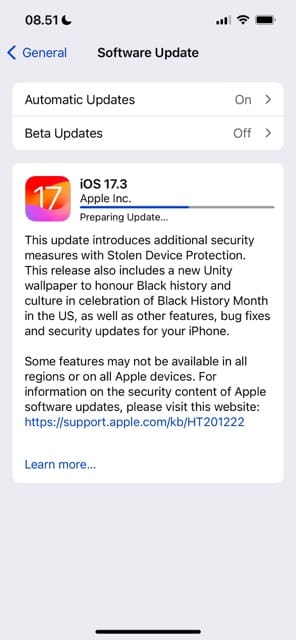
Confirm that you want to download iOS 17.3 by selecting Install Now when the pop-up window appears.
Wait for your software to update. Your iPhone will likely restart at least once or twice.
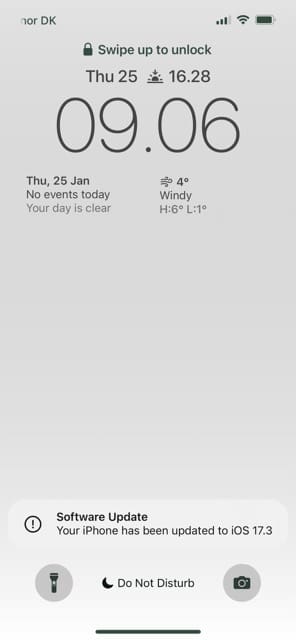
When you’ve got iOS 17.3, you’ll see a notification on your Lock Screen. Enter your passcode and navigate to the Settings app to set up Stolen Device Protection; the steps for that are in the next section.
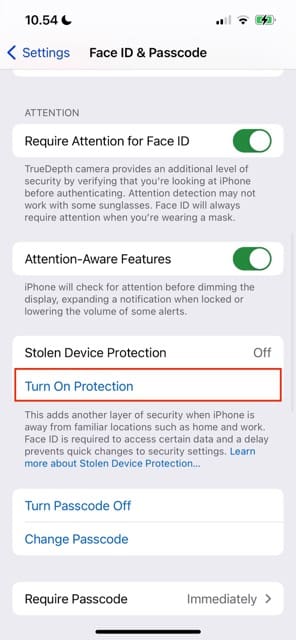
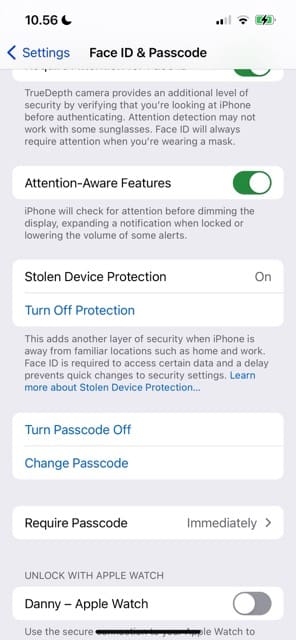
Once you’ve turned on Stolen Device Protection, you’ll see “On” next to this feature in your Face ID & Passcode settings.
If you’re having trouble downloading iOS on your device, please refer to these guides:
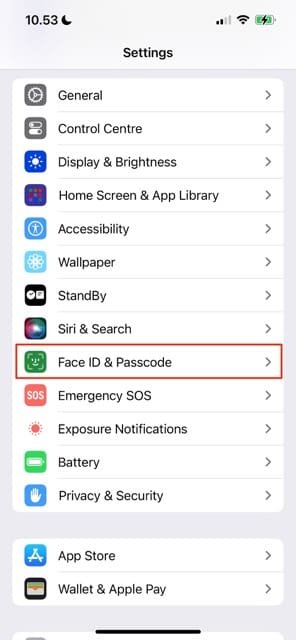
To set up Stolen Device Protection on your iPhone, go to Settings > Face ID & Passcode/Touch ID & Passcode. Then, follow these steps.
Enter your iPhone passcode on the next screen.
Scroll down to Stolen Device Protection and select Turn On Protection.
When you switch on Stolen Device Protection, you’ll need to look at your iPhone so it can verify your identity via Face ID. If you have Touch ID instead, you can verify via that instead.
If you have issues with Face ID or Touch ID when verifying your identity, these guides may help you:
Is Stolen Device Protection Available on iPadOS Too?
No – at the time of writing in January 2024, Stolen Device Protection is only available if you have an iPhone running iOS 17.3 or later.
Stolen Device Protection: Another Layer of Security
Stolen Device Protection is a simple feature that will make it harder for someone to use your iPhone if you’ve lost your phone, and they’ll need to verify their identity twice via Face or Touch ID – meaning that they can’t change your most important settings. Couple that with needing to wait for an hour between both verifications, and you have a very useful tool.
Stolen Device Protection also means that users can’t access certain parts of your device, such as your passcodes or the ability to turn off Lost Mode. So, it’s a very good idea to turn this feature on as soon as you’ve downloaded iOS 17.3.
All of the steps you need to activate the feature are in this guide. Please let us know if you have any questions in the comments section.
Danny has been a professional writer since graduating from university in 2016, but he’s been writing online for over a decade. He has been intrigued by Apple products ever since getting an iPod Shuffle in 2008 and particularly enjoys writing about iPhones and iPads. Danny prides himself on making complex topics easy to understand. In his spare time, he’s a keen photographer.









Write a Comment